Description
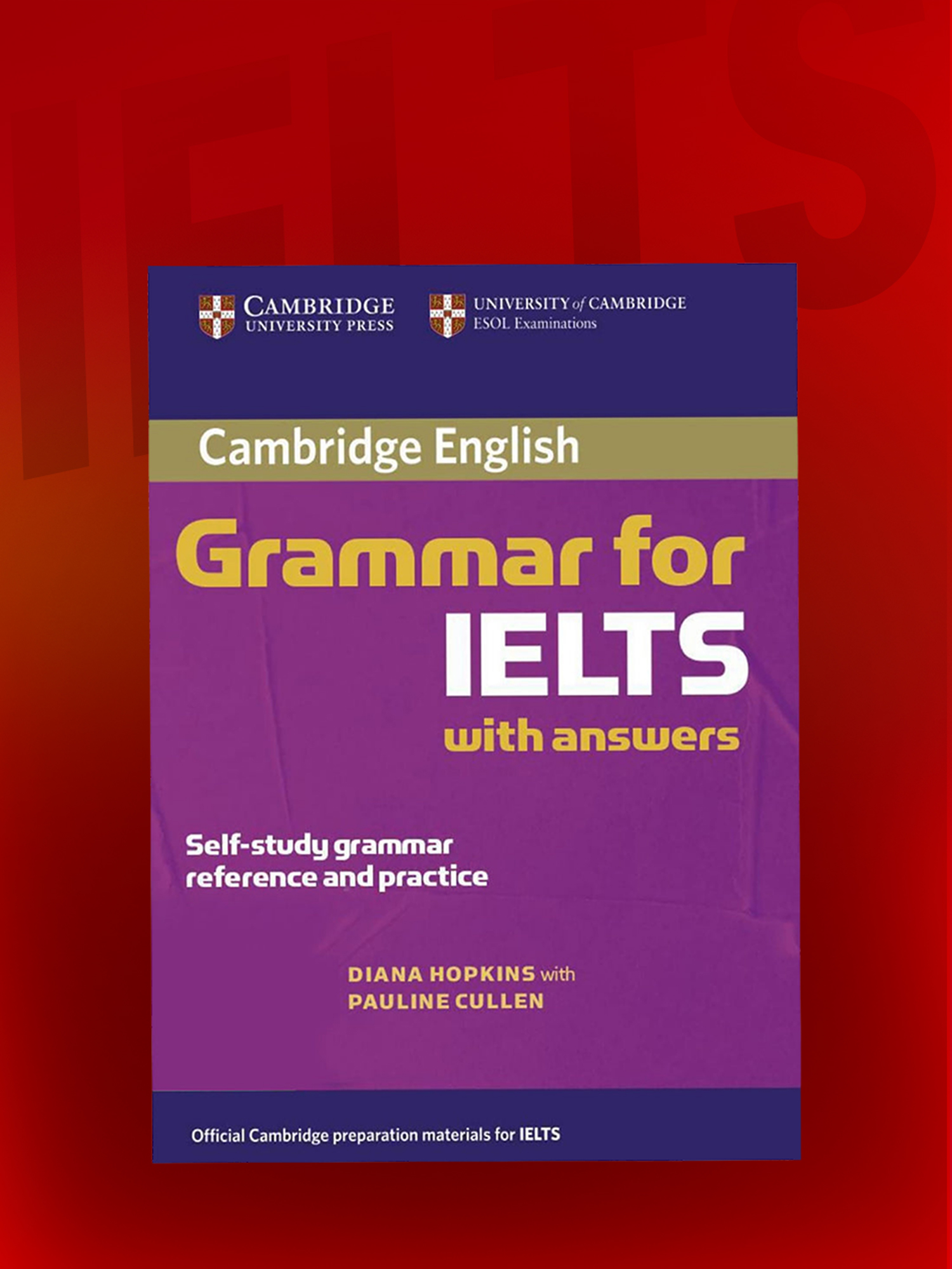
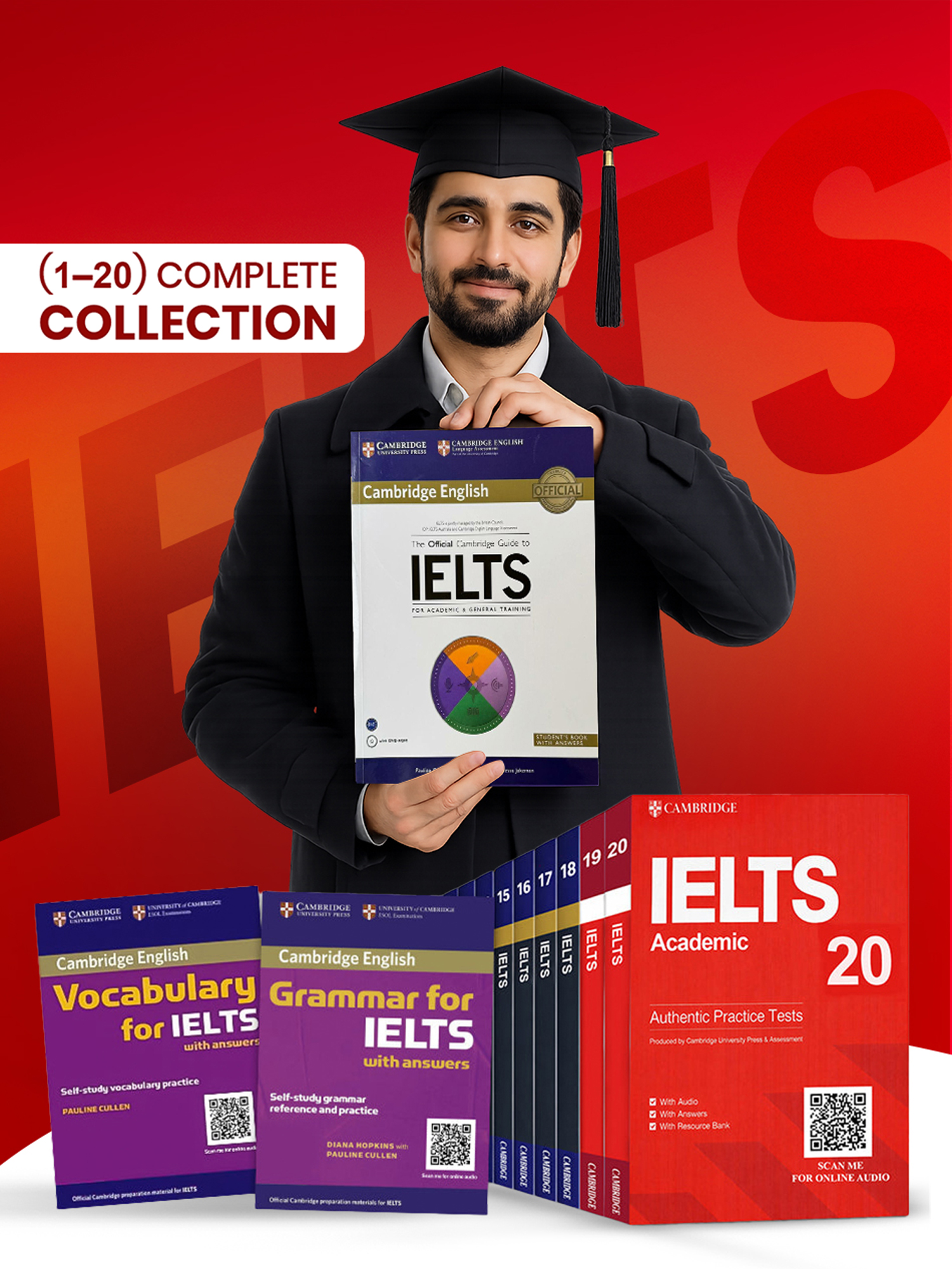
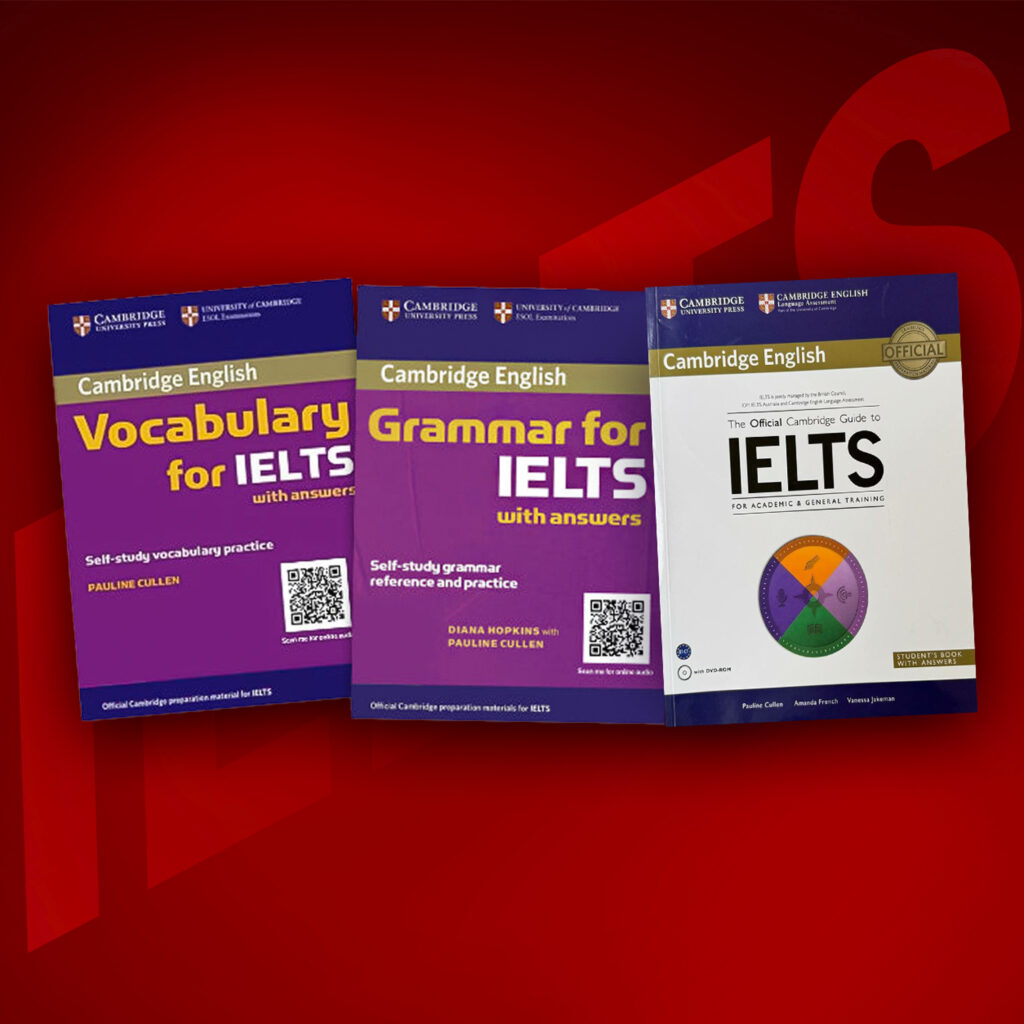
Cambridge Grammar for IELTS
Cambridge Grammar for IELTS is a practical study resource for candidates who want to improve the grammatical accuracy required for the IELTS examination. It helps learners strengthen sentence structure, understand important grammar rules, and apply those rules across Listening, Reading, Writing, and Speaking.
Grammar is especially important in IELTS Writing and Speaking, where candidates are assessed on grammatical range and accuracy. However, strong grammar knowledge also supports Reading comprehension and Listening answer prediction. By studying grammar in context, candidates can communicate more clearly, understand complex sentences, and avoid repeated mistakes.
Cambridge Grammar for IELTS is suitable for IELTS Academic and IELTS General Training candidates. It can be used for self-study, classroom lessons, revision, homework, or additional practice alongside IELTS mock tests and preparation courses.
What Is Cambridge Grammar for IELTS?
Cambridge Grammar for IELTS is designed to help candidates develop the grammar skills commonly required in IELTS tasks.
The resource may include:
- Clear grammar explanations
- IELTS-focused practice exercises
- Sentence-building activities
- Listening-based grammar practice
- Writing exercises
- Speaking-focused tasks
- Grammar revision units
- Answer keys
- Common error correction
- Test-style activities
- Progress checks
- Practice for Academic and General Training candidates
Instead of studying grammar as a collection of isolated rules, students can learn how grammatical structures are used in IELTS-style contexts.
This makes Cambridge Grammar for IELTS useful for candidates who understand basic English but need greater accuracy, variety, and control.
Why Grammar Matters in IELTS
Grammar is not tested in a separate IELTS module, but it affects performance throughout the examination.
Strong grammar can help candidates:
- Write clear and complete sentences
- Organise ideas effectively
- Use a wider range of sentence structures
- Explain opinions accurately
- Describe past, present, and future situations
- Compare information
- Understand complex Reading passages
- Predict answers in Listening
- Speak with greater confidence
- Reduce errors that affect meaning
Candidates with limited grammar may communicate understandable ideas, but frequent mistakes can reduce clarity and lower their estimated band score.
Cambridge Grammar for IELTS helps learners identify these weaknesses and improve them through structured practice.
7 Powerful Benefits of Cambridge Grammar for IELTS
1. Improve Grammatical Range and Accuracy
Grammatical range and accuracy are important assessment areas in IELTS Writing and Speaking.
Grammatical range refers to the variety of sentence structures a candidate can use. Grammatical accuracy refers to how correctly those structures are used.
Cambridge Grammar for IELTS may help candidates practise:
- Simple sentences
- Compound sentences
- Complex sentences
- Relative clauses
- Conditional sentences
- Passive structures
- Modal verbs
- Comparisons
- Different verb tenses
- Cause-and-effect structures
Using a wider range of grammar can help candidates communicate more precisely. However, variety should not come at the cost of accuracy.
Students should first learn how a structure works, practise it in controlled exercises, and then apply it in Writing and Speaking.
2. Strengthen IELTS Writing Skills
Grammar has a direct effect on IELTS Writing performance.
Candidates need to use accurate sentences to describe information, develop arguments, explain ideas, and support opinions.
Cambridge Grammar for IELTS can help improve:
- Sentence construction
- Verb tense consistency
- Subject-verb agreement
- Article use
- Prepositions
- Punctuation
- Sentence variety
- Clause control
- Formal writing style
- Paragraph clarity
Grammar for Academic Writing Task 1
Academic Writing Task 1 may require candidates to describe:
- Line graphs
- Bar charts
- Pie charts
- Tables
- Maps
- Processes
- Diagrams
Candidates may need grammar for:
- Describing past trends
- Comparing figures
- Reporting increases and decreases
- Explaining stages
- Using passive voice
- Writing overview statements
- Describing future projections
For example, candidates should be able to switch correctly between past, present, and future forms depending on the visual information.
Grammar for General Training Writing Task 1
General Training candidates need to write formal, semi-formal, or informal letters.
Grammar practice can help with:
- Polite requests
- Formal expressions
- Modal verbs
- Apologies
- Explanations
- Complaints
- Invitations
- Suggestions
- Future arrangements
The tone and grammar should match the relationship between the writer and the recipient.
Grammar for Writing Task 2
Writing Task 2 requires candidates to present and develop ideas in essay form.
Cambridge Grammar for IELTS may help students practise:
- Opinion structures
- Comparison sentences
- Cause-and-effect language
- Conditionals
- Complex sentences
- Relative clauses
- Concession structures
- Passive voice
- Modal verbs
- Accurate tense use
The objective is to produce clear, controlled, and logically connected sentences.
3. Improve IELTS Speaking Performance
Candidates often know what they want to say but make mistakes when speaking under pressure.
Common Speaking grammar problems include:
- Incorrect verb tenses
- Missing articles
- Subject-verb disagreement
- Incomplete sentences
- Repeated simple structures
- Incorrect prepositions
- Confusion between singular and plural forms
- Weak conditional structures
Cambridge Grammar for IELTS can help candidates practise grammar for:
- Talking about routines
- Describing past experiences
- Discussing future plans
- Expressing opinions
- Comparing situations
- Explaining causes
- Imagining possibilities
- Giving examples
- Discussing advantages and disadvantages
Speaking Part 1
Part 1 questions often involve familiar topics such as home, work, studies, hobbies, and daily routines.
Candidates may need:
- Present simple
- Present continuous
- Past simple
- Frequency expressions
- Comparatives
Speaking Part 2
Part 2 may require candidates to describe a person, place, event, object, or experience.
Useful grammar may include:
- Past tenses
- Relative clauses
- Descriptive structures
- Sequencing language
- Present perfect
Speaking Part 3
Part 3 involves more complex discussion.
Candidates may use:
- Conditionals
- Modals
- Comparisons
- Cause-and-effect structures
- Passive voice
- Complex opinion sentences
Regular grammar practice can help answers sound more accurate and developed.
4. Understand Complex IELTS Reading Sentences
IELTS Reading passages often contain long and complex sentences.
Candidates may struggle when sentences include:
- Multiple clauses
- Relative clauses
- Passive structures
- Embedded information
- Complex noun phrases
- Linking words
- Conditionals
- Academic language
Cambridge Grammar for IELTS can help students break long sentences into smaller parts.
This may improve their ability to:
- Identify the main subject and verb
- Understand supporting details
- Recognise relationships between ideas
- Follow arguments
- Interpret paraphrased information
- Understand cause and effect
- Distinguish facts from opinions
Grammar knowledge can therefore improve Reading comprehension, not only Writing accuracy.
5. Support IELTS Listening Preparation
Grammar can also help candidates during IELTS Listening.
Before hearing the answer, students can examine the sentence structure and predict what type of word is required.
The missing answer may need to be:
- A noun
- A verb
- An adjective
- An adverb
- A number
- A plural form
- A past-tense verb
- A place
- A person
For example, if the sentence includes an article such as “a” or “an,” the answer is likely to be a singular countable noun.
Cambridge Grammar for IELTS can help candidates improve:
- Grammar-based answer prediction
- Word-form recognition
- Singular and plural accuracy
- Spelling awareness
- Verb-form identification
- Sentence completion
- Note completion
- Form completion
These skills can make Listening practice more focused and effective.
6. Identify and Correct Common Grammar Mistakes
Many IELTS candidates repeat the same errors without noticing them.
Common mistakes include:
- He go instead of he goes
- People is instead of people are
- An information instead of information
- Discuss about instead of discuss
- Although…but in the same sentence
- Incorrect article use
- Missing plural endings
- Wrong verb tense
- Sentence fragments
- Run-on sentences
Cambridge Grammar for IELTS may include error-correction exercises that help students recognise and fix these problems.
Candidates should keep a grammar error notebook and record:
- The original mistake
- The corrected sentence
- The grammar rule
- A new example sentence
This method helps prevent the same errors from appearing repeatedly in Writing and Speaking.
7. Build Confidence Through Structured Practice
Many candidates feel uncertain about grammar because they have studied rules without enough practice.
Cambridge Grammar for IELTS provides a more organised learning process.
Students can:
- Read the grammar explanation.
- Study the examples.
- Complete controlled exercises.
- Check the answer key.
- Review incorrect answers.
- Create original sentences.
- Apply the grammar in Writing.
- Use the structure in Speaking.
- Review the topic after several days.
- Test the structure under timed conditions.
This progression helps learners move from understanding a grammar rule to using it confidently.
Important Grammar Topics for IELTS
Cambridge Grammar for IELTS may cover grammar areas such as:
- Present simple
- Present continuous
- Past simple
- Past continuous
- Present perfect
- Past perfect
- Future forms
- Modal verbs
- Conditionals
- Passive voice
- Relative clauses
- Articles
- Prepositions
- Countable and uncountable nouns
- Singular and plural forms
- Comparatives and superlatives
- Gerunds and infinitives
- Linking words
- Complex sentences
- Punctuation
- Subject-verb agreement
- Adjectives and adverbs
These topics support different IELTS tasks and help candidates communicate more accurately.
Cambridge Grammar for IELTS for Academic Candidates
IELTS Academic candidates may benefit from grammar practice related to:
- Formal writing
- Academic sentence structures
- Graph and chart descriptions
- Process descriptions
- Comparison language
- Passive voice
- Research-related vocabulary
- Complex Reading passages
- Essay development
Academic candidates should focus on clarity, accuracy, and formal language rather than using unnecessarily complicated sentences.
Cambridge Grammar for IELTS for General Training Candidates
General Training candidates may benefit from grammar for:
- Formal letters
- Informal letters
- Workplace communication
- Requests
- Complaints
- Invitations
- Advice
- Everyday situations
- Migration-related topics
- Employment discussions
Although the Writing tasks differ, Listening and Speaking grammar preparation is relevant to both Academic and General Training candidates.
Suitable for Self-Study
Cambridge Grammar for IELTS is suitable for learners who prefer independent study.
Self-study candidates can use it to:
- Review one grammar topic daily
- Complete exercises
- Check answers
- Record mistakes
- Write original examples
- Apply grammar in essays
- Practise Speaking responses
- Review older units
- Track improvement
- Prepare for mock tests
A practical weekly routine may include:
- Two grammar units
- One Writing task
- Two Speaking recordings
- One Reading passage
- One Listening section
- One error-review session
Regular short sessions are often more effective than studying several units in one day.
Suitable for IELTS Trainers and Classrooms
IELTS teachers and coaching institutes can use Cambridge Grammar for IELTS for:
- Classroom explanations
- Grammar revision
- Homework
- Writing correction
- Speaking practice
- Error-analysis activities
- Group exercises
- Sentence-building tasks
- Academic Writing lessons
- General Training letter practice
Trainers can select grammar topics according to student weaknesses.
For example, students struggling with Writing Task 1 may need more practice with comparisons, passive voice, and tense selection.
Who Should Use Cambridge Grammar for IELTS?
This resource may be suitable for:
- IELTS Academic candidates
- IELTS General Training candidates
- First-time test takers
- Candidates retaking IELTS
- Students targeting Band 7 or above
- Learners making frequent grammar mistakes
- Candidates struggling with Writing
- Students lacking confidence in Speaking
- Study-abroad applicants
- Migration candidates
- Working professionals
- Self-study learners
- IELTS tutors
- Coaching institutes
Intermediate learners may use it to build accuracy, while advanced learners can use it to refine grammatical range and control.
Key Features of Cambridge Grammar for IELTS
- IELTS-focused grammar explanations
- Practice exercises
- Common error correction
- Writing support
- Speaking grammar practice
- Reading sentence analysis
- Listening answer prediction
- Academic and General Training support
- Verb-tense practice
- Complex sentence development
- Conditionals
- Passive voice
- Relative clauses
- Articles and prepositions
- Answer keys
- Suitable for self-study
- Useful for classroom teaching
- Supports all four IELTS skills
How to Use Cambridge Grammar for IELTS Effectively
To get better results from Cambridge Grammar for IELTS:
- Identify your weakest grammar areas.
- Study one topic at a time.
- Complete every practice exercise.
- Check the answer key carefully.
- Record repeated mistakes.
- Write original example sentences.
- Use the structure in a Writing task.
- Use it in a Speaking answer.
- Review the topic after one week.
- Combine grammar study with IELTS mock tests.
- Ask a tutor to correct your Writing.
- Record Speaking responses and review errors.
Students should avoid learning grammar only through memorisation.
Grammar becomes useful when it is applied in real IELTS tasks.
Why Choose Cambridge Grammar for IELTS?
Cambridge Grammar for IELTS provides focused grammar development for candidates preparing for the examination.
It may help students:
- Improve grammatical accuracy
- Use a wider sentence range
- Write more clearly
- Speak with greater control
- Understand complex Reading passages
- Predict Listening answers
- Correct repeated mistakes
- Build confidence
- Prepare for Academic or General Training
- Develop a structured study routine
- Apply grammar in realistic contexts
- Work towards a higher IELTS band score
The resource can be used independently or alongside IELTS practice tests, vocabulary books, preparation courses, and professional feedback.
Order Cambridge Grammar for IELTS
Strengthen the grammar skills needed for IELTS with Cambridge Grammar for IELTS.
Improve sentence structure, verb tense control, grammatical accuracy, Writing quality, Speaking performance, Reading comprehension, and Listening prediction skills through structured practice.
Whether you are preparing independently, attending IELTS classes, or teaching IELTS candidates, Cambridge Grammar for IELTS provides practical support across all four language skills.
Order Cambridge Grammar for IELTS today and begin building the grammar accuracy required for your target IELTS band score.
Also follow us on instagram and facebook.






Reviews
There are no reviews yet.