Description
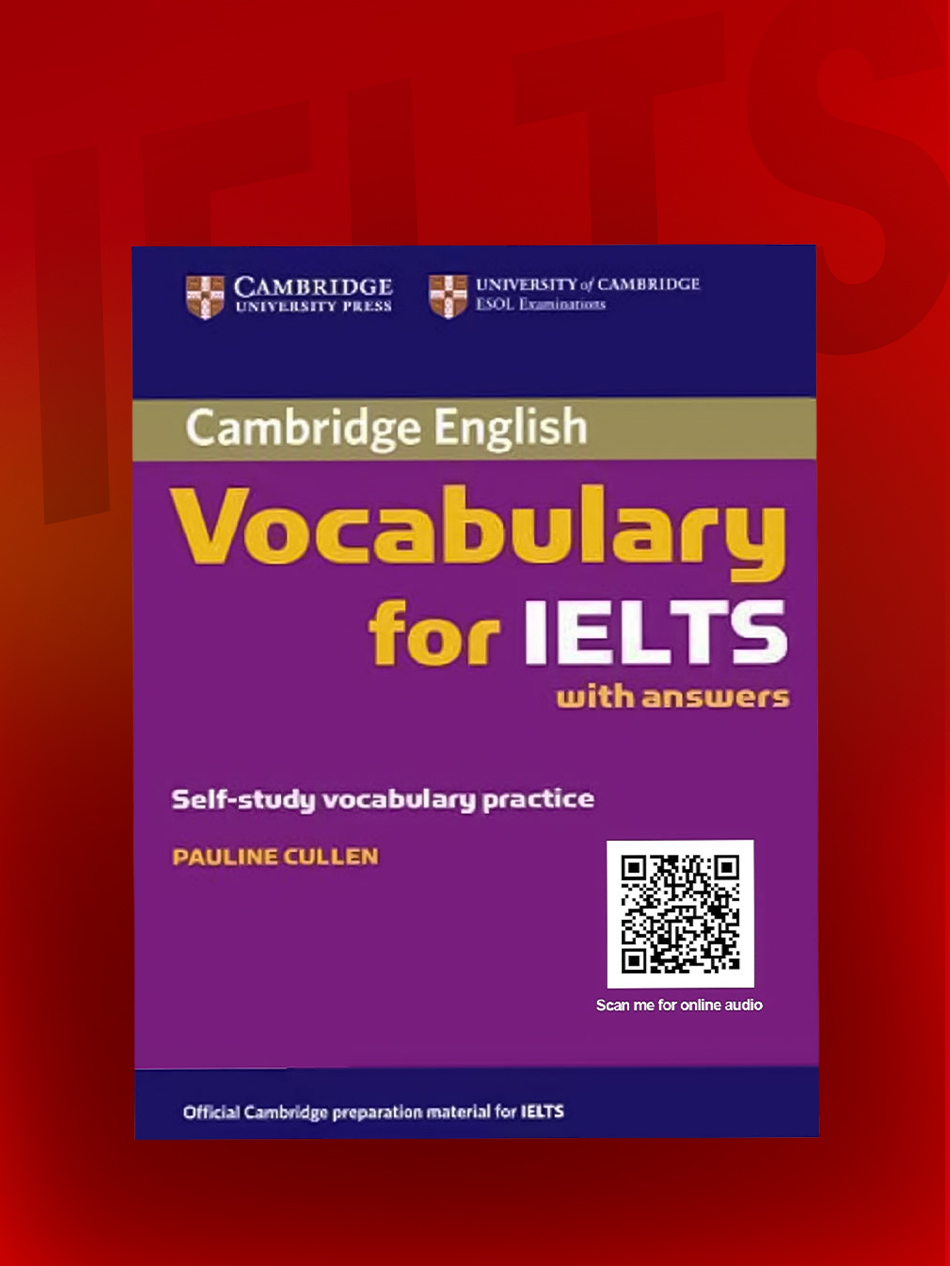
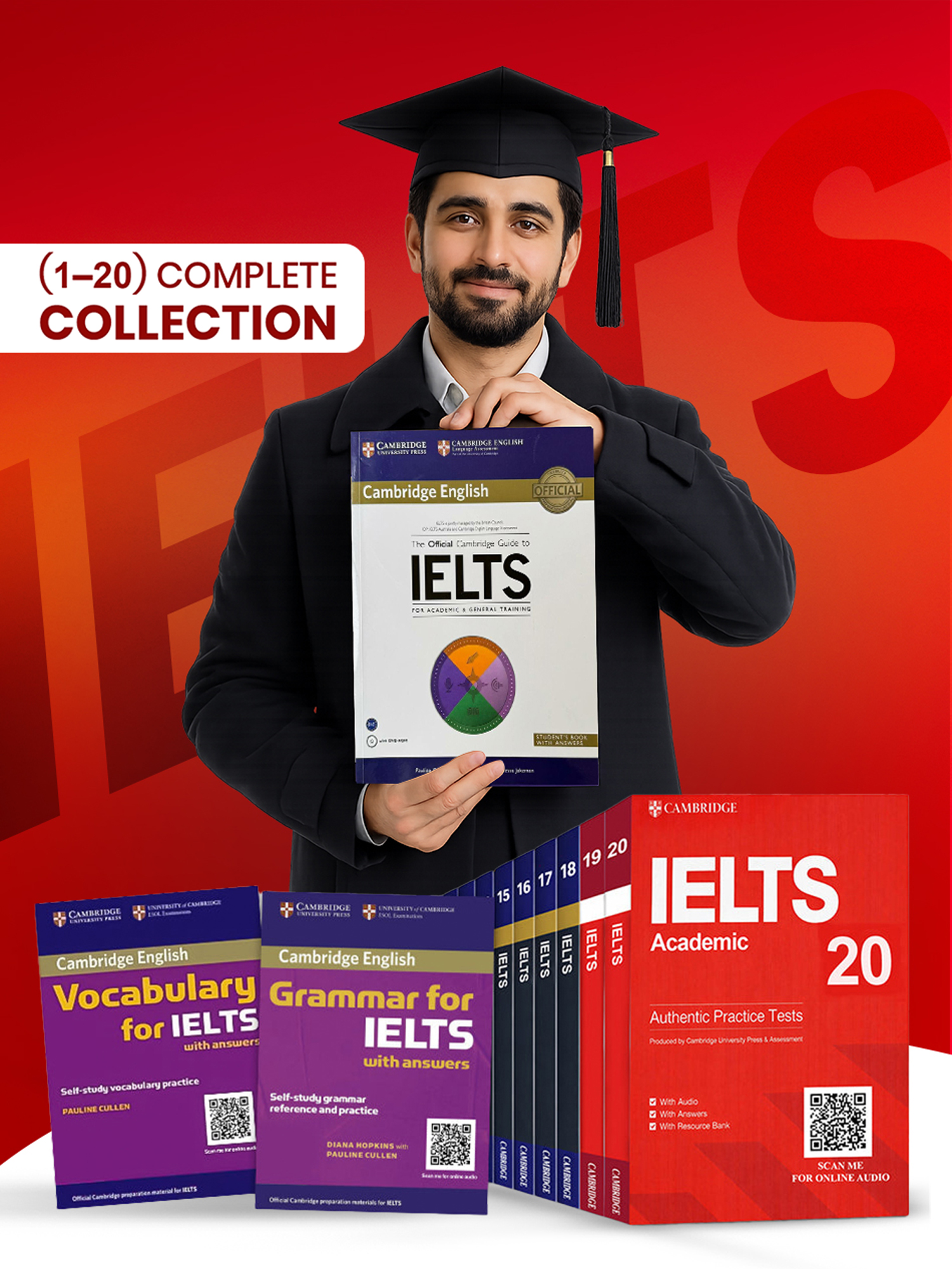
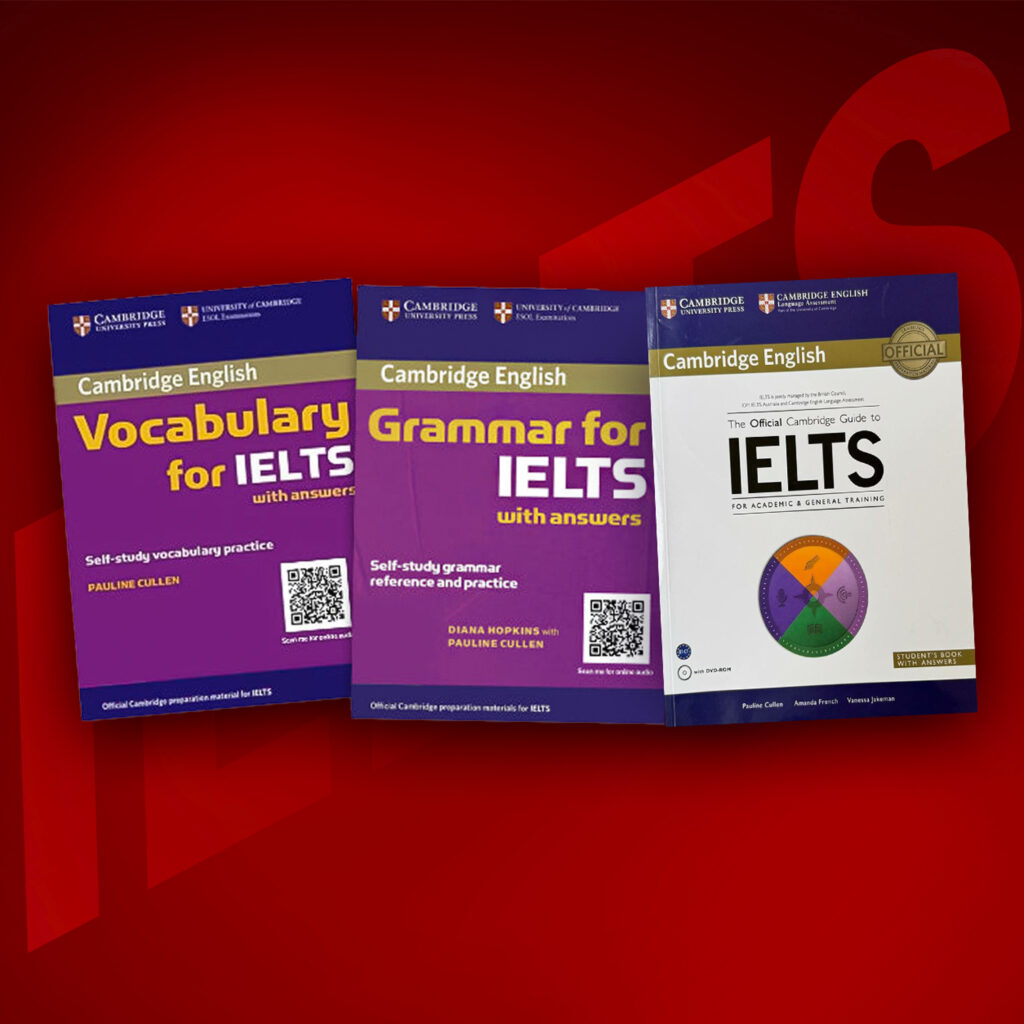
Cambridge Vocabulary for IELTS
Cambridge Vocabulary for IELTS is a practical preparation resource for candidates who want to expand their vocabulary and improve their performance across all four IELTS modules. It helps learners develop the words, phrases, collocations, and paraphrasing skills needed for Listening, Reading, Writing, and Speaking.
A strong vocabulary is essential for understanding complex Reading passages, following Listening recordings, writing clear responses, and speaking confidently about familiar and unfamiliar topics. Candidates with limited vocabulary may repeat the same words, misunderstand questions, or struggle to express their ideas accurately.
Cambridge Vocabulary for IELTS provides structured vocabulary development through topic-based lessons, practical exercises, and IELTS-style activities. It is suitable for IELTS Academic and IELTS General Training candidates, including first-time test takers, self-study learners, candidates retaking IELTS, and students targeting Band 7 or above.
What Is Cambridge Vocabulary for IELTS?
Cambridge Vocabulary for IELTS is designed to help candidates learn and apply vocabulary commonly required in the IELTS examination.
The resource may include:
- Topic-based vocabulary
- Academic vocabulary
- General English vocabulary
- Common IELTS collocations
- Synonyms and antonyms
- Word-family practice
- Paraphrasing exercises
- Context-based vocabulary tasks
- Listening activities
- Reading exercises
- Writing-focused vocabulary
- Speaking practice topics
- Answer keys
- Revision tests
- Progress checks
Instead of memorising isolated words, students learn how vocabulary is used in complete sentences and realistic situations.
This approach helps candidates understand meaning, tone, grammar, and natural word combinations.
Why Vocabulary Matters in IELTS
Vocabulary is not tested as a separate IELTS module, but it affects performance throughout the examination.
Strong vocabulary can help candidates:
- Understand Reading passages
- Recognise synonyms and paraphrases
- Follow Listening recordings
- Predict possible answers
- Avoid repeated words in Writing
- Develop ideas more clearly
- Express opinions in Speaking
- Discuss complex topics
- Use precise language
- Improve overall communication
In IELTS Writing and Speaking, candidates are assessed partly on lexical resource. This includes vocabulary range, accuracy, flexibility, and appropriate word choice.
Cambridge Vocabulary for IELTS helps candidates improve these areas through regular and focused practice.
7 Powerful Benefits of Cambridge Vocabulary for IELTS
1. Learn Vocabulary for Common IELTS Topics
IELTS questions cover a wide range of social, educational, environmental, and professional topics.
Cambridge Vocabulary for IELTS may include vocabulary related to:
- Education
- Technology
- Environment
- Health
- Employment
- Transport
- Travel
- Housing
- Family
- Culture
- Media
- Government
- Crime
- Science
- Communication
- Globalisation
- Society
- Tourism
- Public services
- Urban development
Learning topic-based vocabulary helps candidates prepare for Writing essays, Speaking discussions, Reading passages, and Listening conversations.
For example, students preparing for an environment topic may learn words and phrases related to pollution, renewable energy, conservation, climate change, and public awareness.
2. Improve IELTS Writing Vocabulary
A wider vocabulary can help candidates write more clearly and avoid unnecessary repetition.
Cambridge Vocabulary for IELTS may support both Writing Task 1 and Writing Task 2.
Vocabulary for Academic Writing Task 1
Academic Writing Task 1 may require candidates to describe:
- Line graphs
- Bar charts
- Pie charts
- Tables
- Maps
- Processes
- Diagrams
Useful vocabulary areas may include:
- Increases and decreases
- Stable trends
- Fluctuations
- Comparisons
- Percentages
- Proportions
- Stages
- Locations
- Time periods
- Significant changes
Candidates may practise expressions such as:
- Increased gradually
- Fell sharply
- Remained stable
- Reached a peak
- Accounted for
- Was significantly higher
- Experienced a slight decline
Students should use these phrases accurately and avoid repeating the same verbs throughout the response.
Vocabulary for General Training Writing Task 1
General Training candidates may need vocabulary for:
- Formal letters
- Semi-formal letters
- Informal letters
- Complaints
- Requests
- Invitations
- Apologies
- Advice
- Explanations
- Arrangements
Cambridge Vocabulary for IELTS may help students choose language that matches the tone of the letter.
Vocabulary for Writing Task 2
Writing Task 2 may involve:
- Opinion essays
- Discussion essays
- Advantages and disadvantages
- Problem and solution questions
- Cause-and-effect essays
- Two-part questions
Candidates may learn vocabulary for:
- Expressing opinions
- Presenting arguments
- Explaining causes
- Suggesting solutions
- Discussing benefits
- Describing disadvantages
- Comparing viewpoints
- Giving examples
- Reaching conclusions
The objective is not to use the most difficult words possible. Candidates should use vocabulary that is accurate, relevant, and natural.
3. Build Better IELTS Speaking Answers
IELTS Speaking candidates need enough vocabulary to discuss different topics without excessive repetition or hesitation.
Cambridge Vocabulary for IELTS may help students develop language for:
- Describing people
- Talking about places
- Explaining experiences
- Expressing preferences
- Giving opinions
- Comparing situations
- Discussing social issues
- Predicting future changes
- Explaining advantages and disadvantages
- Supporting ideas with examples
Speaking Part 1
Part 1 includes familiar topics such as:
- Home
- Work
- Studies
- Hobbies
- Food
- Travel
- Technology
- Family
- Shopping
- Daily routines
Candidates should practise giving natural and slightly developed answers.
Speaking Part 2
Part 2 requires candidates to speak about a topic for an extended period.
Topic vocabulary can help students:
- Add descriptive details
- Organise ideas
- Avoid repetition
- Speak more confidently
- Explain experiences clearly
- Continue speaking without long pauses
Speaking Part 3
Part 3 includes more complex discussions.
Candidates may need vocabulary for:
- Social change
- Education systems
- Environmental problems
- Technology development
- Employment trends
- Public policy
- Cultural differences
- Future predictions
Regular vocabulary practice helps candidates express ideas more precisely and naturally.
4. Improve Paraphrasing Skills
Paraphrasing is important throughout IELTS.
Reading and Listening questions often use words that are different from those in the passage or recording. Writing candidates also need to paraphrase the task without copying it directly.
Cambridge Vocabulary for IELTS may help students practise:
- Synonyms
- Word families
- Sentence reformulation
- Changing word forms
- Replacing phrases
- Using alternative expressions
- Avoiding repetition
- Recognising equivalent meanings
For example:
- Increase → rise, grow, climb
- Important → significant, essential, crucial
- Problem → issue, challenge, difficulty
- Reduce → decrease, lower, minimise
- Help → support, assist, contribute to
Candidates should remember that synonyms are not always interchangeable. The correct word depends on meaning, grammar, and context.
5. Learn Useful Collocations
Collocations are words that commonly appear together.
Natural collocations can improve both Writing and Speaking.
Cambridge Vocabulary for IELTS may include combinations such as:
- Make a decision
- Take responsibility
- Strong evidence
- Serious problem
- Major improvement
- Rapid growth
- Heavy traffic
- Academic achievement
- Environmental damage
- Public awareness
- Economic development
- Career opportunities
Learning collocations helps candidates use vocabulary more naturally.
Instead of memorising the word “impact,” students may learn:
- Have an impact
- Significant impact
- Negative impact
- Long-term impact
- Impact on society
This method makes vocabulary easier to apply in IELTS responses.
6. Support IELTS Reading and Listening
Vocabulary knowledge improves comprehension in both Reading and Listening.
Reading Support
Cambridge Vocabulary for IELTS may help candidates:
- Understand academic words
- Recognise paraphrasing
- Identify synonyms
- Use context clues
- Understand word families
- Follow arguments
- Distinguish opinions from facts
- Interpret unfamiliar vocabulary
Candidates do not need to understand every word in a Reading passage. However, stronger vocabulary makes it easier to identify key information and understand the overall meaning.
Listening Support
Vocabulary development may help candidates:
- Recognise spoken words
- Predict answers
- Understand common expressions
- Follow conversations
- Identify topic changes
- Improve spelling
- Recognise connected speech
- Understand different accents
Candidates may know a word in writing but fail to recognise it when spoken quickly. Listening practice helps connect written vocabulary with pronunciation.
7. Suitable for Self-Study and Classroom Learning
Cambridge Vocabulary for IELTS can be used by independent learners and IELTS trainers.
For Self-Study Learners
Students can use the resource to:
- Learn one topic at a time
- Complete exercises
- Record new words
- Create example sentences
- Review collocations
- Practise paraphrasing
- Apply vocabulary in Writing
- Use new words in Speaking
- Review mistakes
- Track progress
For IELTS Trainers
Teachers and coaching institutes may use it for:
- Vocabulary lessons
- Speaking discussions
- Writing activities
- Homework
- Group exercises
- Paraphrasing tasks
- Error correction
- Topic-based revision
- Progress tests
- Classroom preparation
Important Vocabulary Areas for IELTS
Cambridge Vocabulary for IELTS may cover language related to:
- Education and learning
- Employment and careers
- Science and research
- Technology and communication
- Environment and climate
- Health and fitness
- Transport and travel
- Culture and traditions
- Media and advertising
- Housing and cities
- Government and society
- Crime and law
- Tourism
- Family relationships
- Global issues
- Economic development
These topics frequently appear in IELTS Reading, Writing, Listening, and Speaking practice.
Academic Vocabulary for IELTS
Academic candidates may benefit from vocabulary related to:
- Research
- Analysis
- Data
- Trends
- Evidence
- Education
- Scientific development
- Social change
- Statistics
- Comparison
- Cause and effect
- Processes
Candidates should focus on clear and accurate language rather than unnecessarily complicated vocabulary.
General Training Vocabulary
General Training candidates may benefit from vocabulary used in:
- Workplace communication
- Notices
- Advertisements
- Public services
- Formal letters
- Informal letters
- Complaints
- Requests
- Employment situations
- Migration topics
- Everyday communication
Listening and Speaking vocabulary is useful for both IELTS Academic and General Training candidates.
How to Use Cambridge Vocabulary for IELTS Effectively
To get better results from Cambridge Vocabulary for IELTS, students should follow a structured routine.
- Study one topic at a time.
- Write down new words and phrases.
- Record useful collocations.
- Check pronunciation.
- Create original example sentences.
- Complete all practice exercises.
- Review incorrect answers.
- Use new words in a Writing task.
- Practise the same vocabulary in Speaking.
- Review older vocabulary every week.
- Test yourself without checking notes.
- Combine vocabulary study with mock tests.
Students should avoid learning hundreds of words without using them.
New vocabulary becomes more useful when it is applied in sentences, essays, conversations, and practice tests.
Common Vocabulary Mistakes to Avoid
Candidates often make mistakes such as:
- Using difficult words incorrectly
- Memorising words without context
- Ignoring collocations
- Repeating the same vocabulary
- Using informal words in academic Writing
- Choosing inaccurate synonyms
- Learning spelling but not pronunciation
- Using memorised phrases unnaturally
- Failing to review old vocabulary
- Translating directly from another language
Cambridge Vocabulary for IELTS can help candidates develop a more accurate and natural vocabulary-learning approach.
Who Should Use Cambridge Vocabulary for IELTS?
This resource may be suitable for:
- IELTS Academic candidates
- IELTS General Training candidates
- First-time test takers
- Candidates retaking IELTS
- Students targeting Band 7 or above
- Learners with limited vocabulary
- Candidates struggling with paraphrasing
- Students repeating words in Writing
- Learners lacking Speaking confidence
- Study-abroad applicants
- Migration candidates
- Working professionals
- IELTS tutors
- Coaching institutes
- Self-study learners
Key Features of Cambridge Vocabulary for IELTS
- IELTS-focused vocabulary
- Topic-based lessons
- Academic vocabulary
- General English vocabulary
- Collocation practice
- Paraphrasing exercises
- Synonyms and antonyms
- Word families
- Writing vocabulary
- Speaking expressions
- Reading support
- Listening support
- Answer keys
- Revision exercises
- Suitable for self-study
- Useful for classroom learning
- Supports Academic and General Training
- Helps prepare for all four IELTS modules
Why Choose Cambridge Vocabulary for IELTS?
Cambridge Vocabulary for IELTS provides focused language development for candidates preparing for the examination.
It may help students:
- Expand vocabulary range
- Improve word accuracy
- Recognise paraphrases
- Use natural collocations
- Write clearer responses
- Speak more confidently
- Understand Reading passages
- Follow Listening recordings
- Avoid repeated words
- Develop topic-based language
- Improve self-study routines
- Prepare for Academic or General Training
- Work towards a higher IELTS band score
The resource can be used independently or alongside IELTS practice books, grammar resources, mock tests, and professional coaching.
Order Cambridge Vocabulary for IELTS
Strengthen the vocabulary skills required for IELTS with Cambridge Vocabulary for IELTS.
Develop topic-based vocabulary, improve paraphrasing, learn useful collocations, and build the language needed for Listening, Reading, Writing, and Speaking.
Whether you are studying independently, attending an IELTS preparation course, or teaching IELTS candidates, Cambridge Vocabulary for IELTS offers practical support for consistent and structured vocabulary development.
Order Cambridge Vocabulary for IELTS today and begin building the vocabulary needed for your target IELTS band score.
Follow us on Instagram and facebook.






Reviews
There are no reviews yet.